Building software the old way takes forever. You hire developers, explain what you need, wait six months, then realize half of it's wrong. The low-code development platforms changed that whole process. Companies build apps in weeks now, and they're not giving up the custom stuff that actually matters to their business.
The shift happened faster than anyone expected. Small businesses and Fortune 500 companies are both using these platforms now. What used to require a full development team can sometimes be handled by the people who actually understand the problem. That's the real game-changer here.
Understanding Low-Code Development Platforms
Think about the image of a building with blocks instead of carving each part of whatever your piece is out of wood. That's what low-code development platforms do basically for software.
You've got drag and drop tools, you've got templates that do something, and you have almost no reason to write yourself actual code, except when one needs to be super specific. It's Not a Toy, It's just Smarter Development.
Business people and developers can finally work together without someone playing translator. Microsoft and Salesforce saw this coming years ago. Everyone else figured it out eventually.
Benefits of Low-Code for Custom Software Development
Faster Time-to-Market: Six-month projects? Try six weeks instead.
Cost Efficiency: It will save you 50-70% on development.
Easy Maintenance: Your team don't have to call experts each time while fixing things.
Scalability: Apps grow with you instead of breaking.
And you still get custom builds. That's the bit that people don't expect, speed and customization isn't the opposite anymore.
Industry-Specific Applications
Each industry uses this stuff differently based on their needs.
Healthcare:
Kaiser Permanente uses custom software development services with low-code for patient portals and scheduling. HIPAA compliance comes standard. When healthcare rules change, which happens constantly, they update fast instead of waiting months for developers.
Financial Services:
JPMorgan Chase can't sit around waiting for apps to get built. They use low-code for customer apps, loan processing, compliance tracking. Financial regulations never stop changing, and low-code helps banks keep pace.
Retail:
Target and Walmart build inventory systems, schedule employees, run customer programs all on low-code. Connects to their e-commerce without rebuilding everything from scratch.
Real-World Use Cases Driving Results
Customer Portals and Self-Service Applications
One Texas logistics company built their customer portal in six weeks using low-code development platforms. Customer service calls dropped 40% almost immediately. The support team stopped answering the same five questions all day and started solving actual problems.
Internal Workflow Automation
A manufacturing company in Ohio let their operations team build an equipment maintenance tracker themselves. IT didn't control every little decision. The people using the system every day built it how they wanted. Equipment downtime dropped 25%, development took weeks.
Legacy System Modernization
Low-code builds modern front-ends while your legacy systems keep running underneath. You're getting more value from what you already paid for, making it easier to use, pulling better data out. Everybody wins.
Data Dashboard and Reporting Tools
Low-code lets non-technical people pull data from wherever it lives, build dashboards that make sense, spot trends that matter. Decisions happen when they should instead of when IT gets around to it.
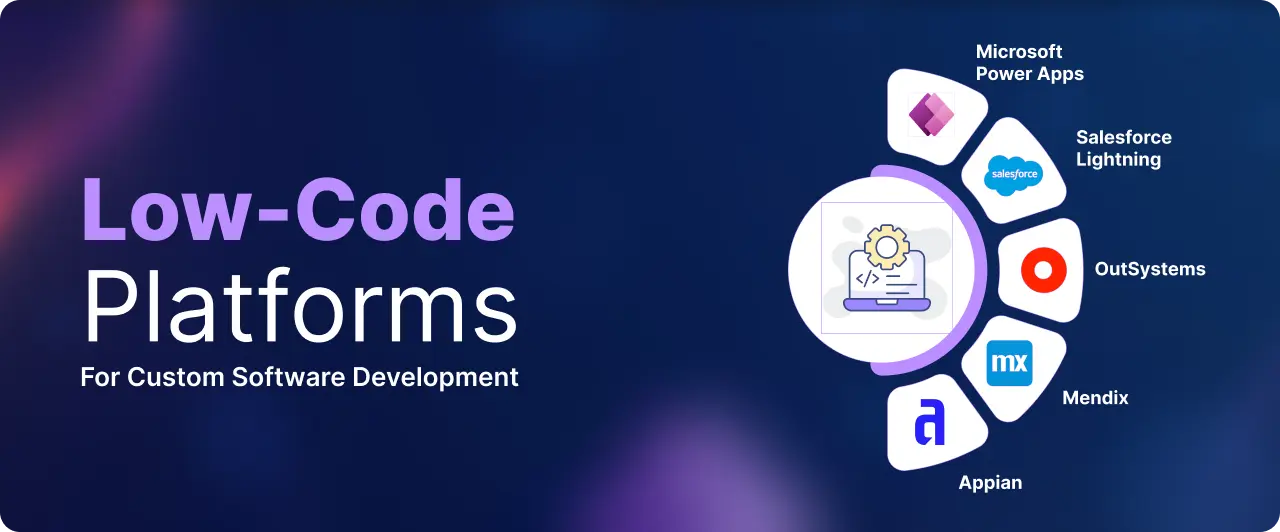
Popular Low-Code Platforms in USA Market
Different platforms work better for different situations. Here's what's actually getting used by American companies:
Choosing the Right Approach for Your Business
Low-code isn't magic. Some projects need it, others don't.
When Low-Code Makes Sense:
Timeline's measured in weeks
Requirements will change (they always do)
Business users need to maintain it
Building standard business apps
When Traditional Development Works Better:
Specialized algorithms or heavy processing
Performance is absolutely critical
Building unique IP that sets you apart
Maximum security control required
Smart custom software development services help you decide which approach fits your situation. It's about solving your problem, not following whatever's trendy.
Getting Started with Low-Code Development
Pick something small and annoying. One problem everyone complains about. Build a quick fix. Get people using it. Listen to feedback. Expand from there.
Most big success stories started tiny, one department fixing their own headache. Small wins beat big plans with low-code development platforms.
Use platforms that fit what you already have. Microsoft shop? Power Apps makes sense. Salesforce everywhere? Try Lightning. Best platform is whatever your team will actually use without fighting you about it.
🎙 Low Code Platforms for Custom Software in USA
Tired of waiting six months for software that still misses the mark? In this episode, we explore how low code development platforms are helping businesses build faster without losing customization.
If you are considering custom software development services or working with a software development company in USA, this will help you decide the right approach.
Listen to this podcast and discover a smarter way to build.
Ready to Build Something That Actually Works?
VT Netzwelt works with businesses across America to figure out the right way to build apps, whether that's using newer platforms or sticking with traditional development. We've handled projects for retail stores, healthcare providers, financial companies, and manufacturers.
Book a free call. We'll chat and discuss what it is you're looking to build. If these are the platforms for your situation, and provide you with a direct answer on timelines and costs of such a process.
Frequently Asked Questions (FAQs)
Low-code lets developers write custom code when you hit limits. No-code is purely visual, zero coding allowed. Low-code handles complex stuff better and integrates easier with other systems you’re already using.
Absolutely. OutSystems and Mendix power apps with millions of users. Fortune 500 companies run critical operations on these platforms every day. You need good architecture, but the platforms scale fine.
Business users build simple apps in a few days. Developers get comfortable in 2-4 weeks. Most platforms have training materials and active communities when you need help.
Good platforms meet SOC 2, ISO 27001, HIPAA standards. Security depends on your configuration and deployment more than the platform. Follow best practices, test properly, you’re good.
Licensing runs $10-$100+ per user monthly based on features. Total project costs usually run 50-70% less than traditional development when you count faster delivery, easier maintenance, fewer developer hours.
Dushyant Takhar is a Web App Development Expert, passionate about building robust and scalable applications. His focus is on creating innovative solutions that streamline business processes and set companies up for long-term digital success.
A 2026 founder’s guide to building proprietary trading platforms, covering architecture, features, tech stack, costs, and scaling strategies for success.
Explore how fintech software is built in the USA, from core features and compliance to architecture, development costs, and the latest trends driving financial innovation.
Ready to build smarter real estate tech? Discover how PropTech software can boost efficiency, streamline workflows, and meet U.S. market demands. Let’s get started!