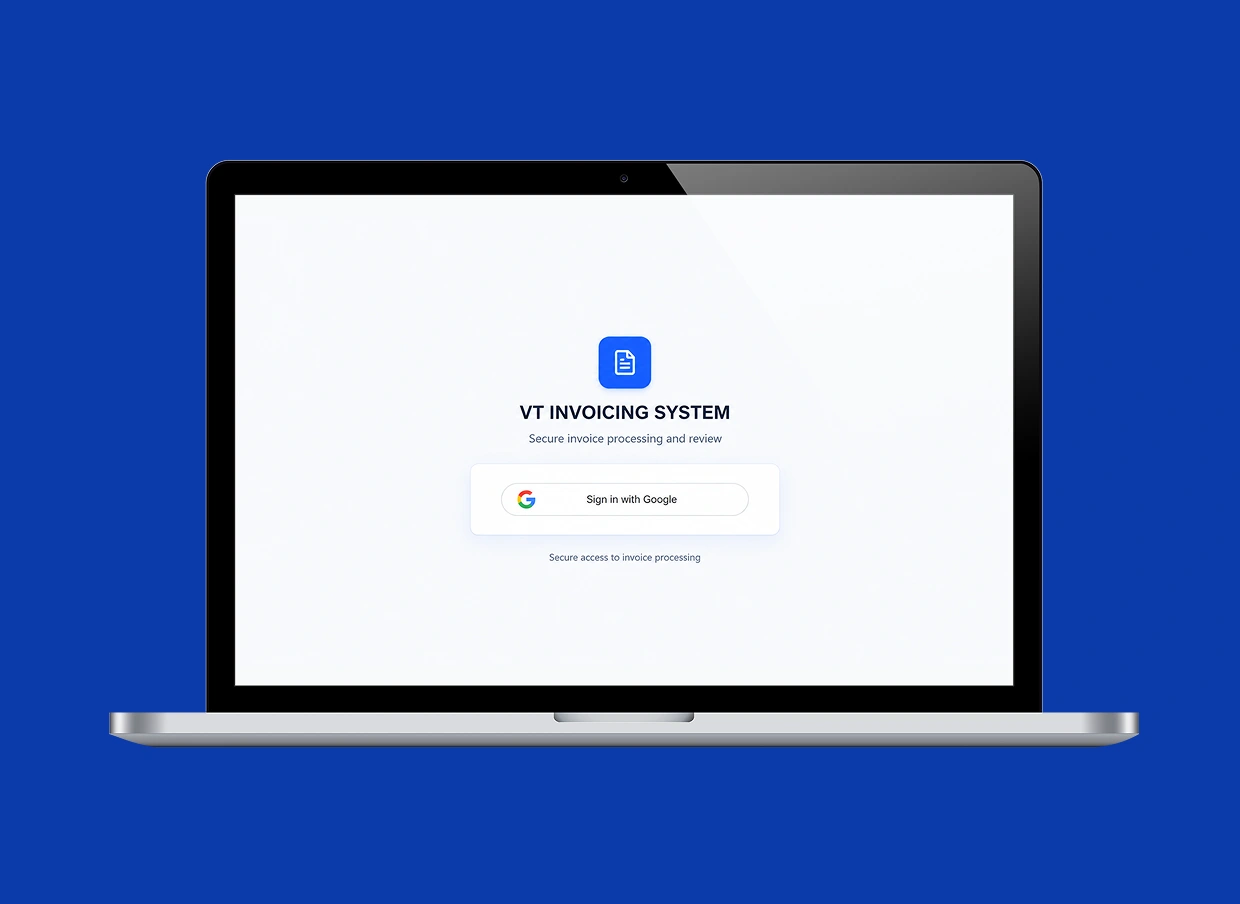
An AI-assisted pipeline that reads invoices, matches vendors, and posts GST-compliant draft bills to Zoho Books under human approval.
Accounts payable work in India still runs largely on manual entry: read the invoice, retype it into the accounting system, apply the GST rules by hand. Formats vary, vendor names never quite match, and there is rarely a record of who touched what. Our client wanted that effort removed without giving up control over what reaches their books.
We designed the workflow around one decision: AI reads, a person approves. That boundary shaped the architecture. An OpenAI vision model extracts vendor details, line items, taxes, and dates from uploaded PDFs and images, and a reviewer confirms the result in a side-by-side interface before anything is published.
Vendor identification needed more than a name lookup, so we built a cascade that tries GSTIN first, then phone, then exact name, then fuzzy matching with RapidFuzz, and finally LLM disambiguation. An unmatched vendor is created at publish time. A second LLM pass picks the GL account from vendor and line-item context.
Every bill lands in Zoho Books as a draft with the original document attached, which keeps final posting in the client’s hands. Each published invoice is written to Google Sheets by year and month, so the finance team has an audit trail they can open without us.
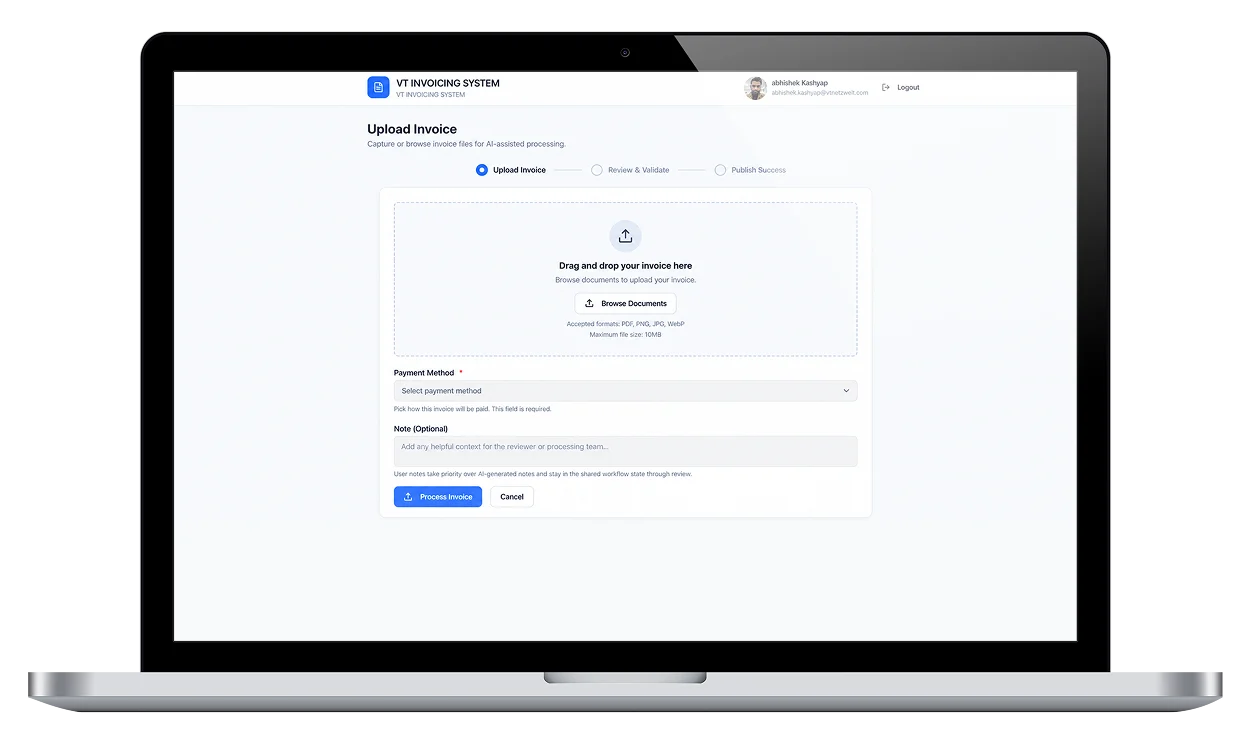
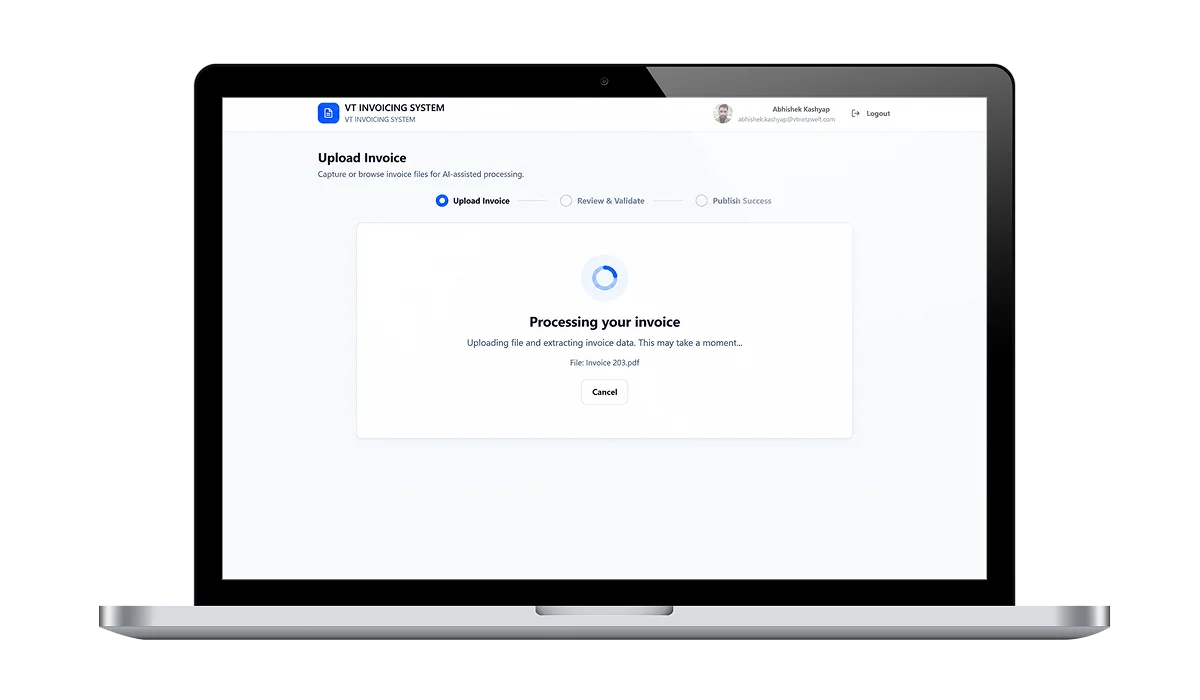
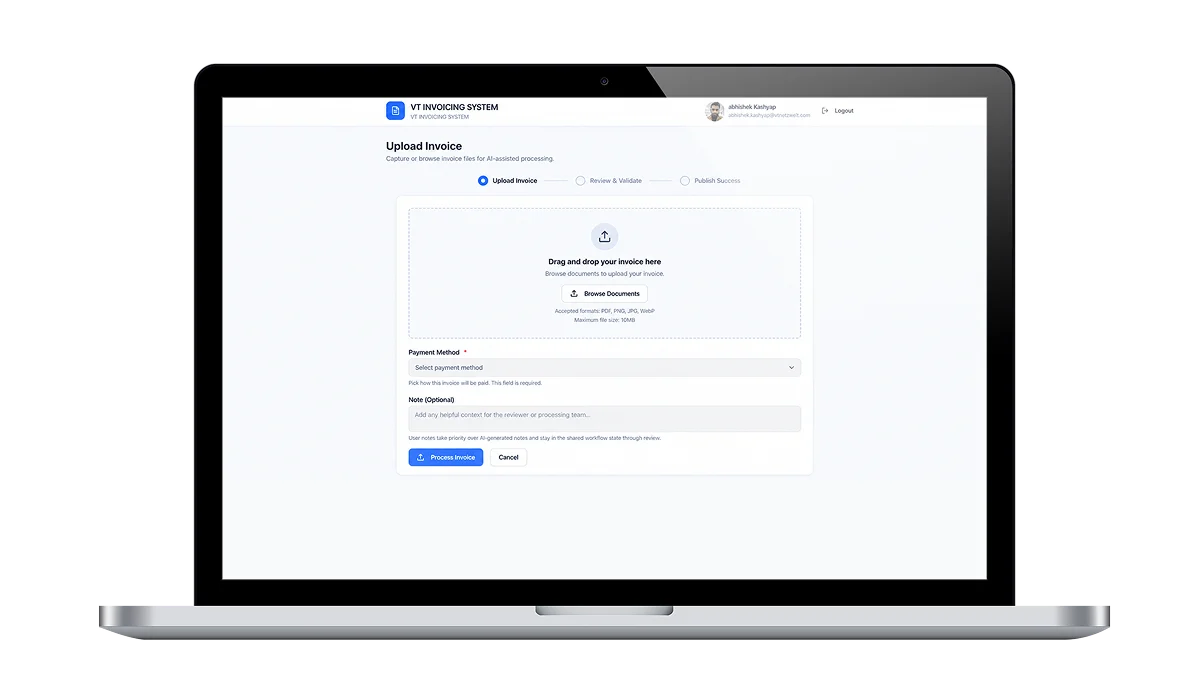
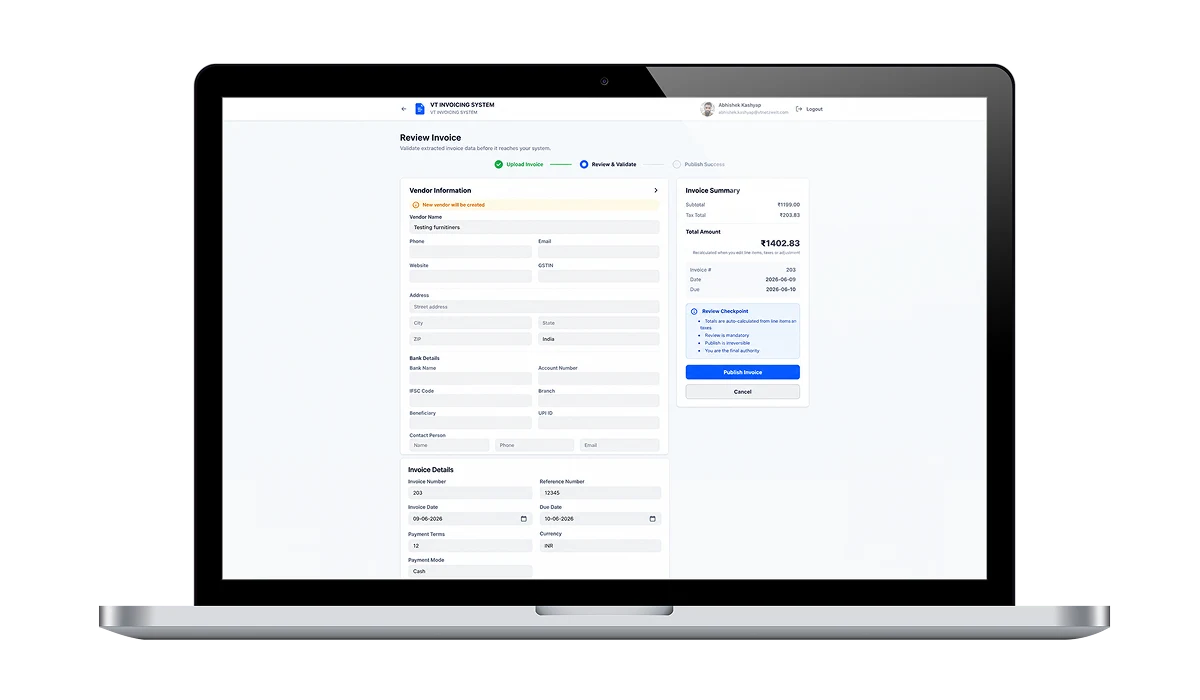
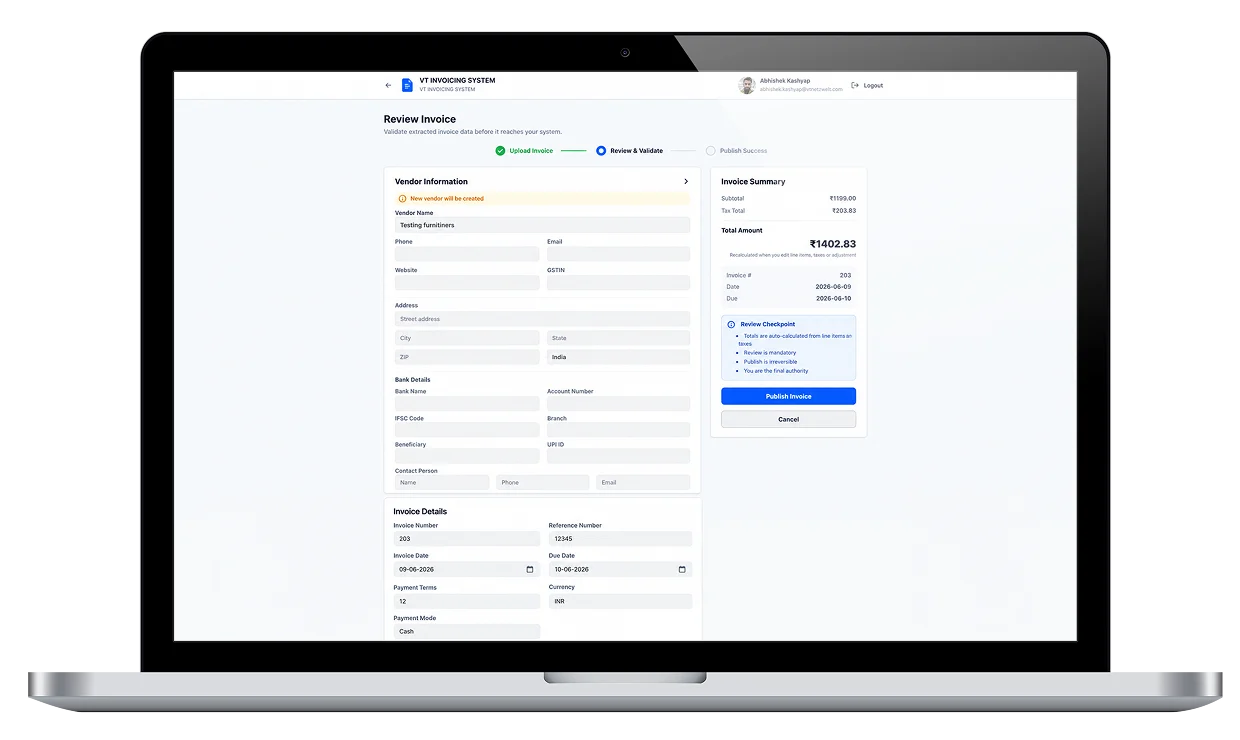
Full automation would have put unverified data into the client's books. Approval was placed at the end of every run, which made the AI useful without making it the final authority.
Each invoice follows the same fixed path from upload to audit log. Finance teams need to know what the system will do with any document, and predictable handling is what earns that trust.
Name matching alone produced duplicates. A cascade from GSTIN through fuzzy matching to LLM disambiguation resolved vendors accurately and kept the ledger clean.
Bills reach Zoho Books as drafts, and final posting stays a human action. That single constraint keeps an extraction error from landing straight in the accounts.
Audit records were written to Google Sheets, organized by year and month. Finance staff can open, filter and share that log without a developer or a custom screen.
What Makes Us The Buzz of Tech Town?
They acted as a true consulting partner, deeply invested in our vision and committed to helping us bring it to life.
VT Netzwelt has successfully delivered a custom CRM that aligns with the client's vision. The team demonstrates exceptional project management and documentation practices, delivering items on time. Their responsiveness, attention to detail, and thoughtful feature proposals are impressive.
Anonymous
Director, Construction Software Company

They delivered a more robust product than we expected within the time and budget we had laid out.
The team exceeded expectations by enhancing the solution beyond the requested features. Their regular communication style kept stakeholders informed throughout the project. VT Netzwelt remained within time and cost estimates while maintaining well-organized task management methods.
Anonymous
Co-Founder, Financial Technology Company
They genuinely valued our input and made sure we were informed and engaged throughout the entire process.
The automated processes enabled the client to save time on manual tasks, reduce errors, increase their productivity, and enhance their customers' satisfaction. VT Netzwelt managed everything effectively. Their resources were highly organized and always kept the client updated about their progress.
Anonymous
Executive, Great Dwellings
We're really impressed with the systems and platforms VT Netzwelt delivers.
VT Netzwelt contributes innovative suggestions to help formulate the scope of products and new features. The team consistently takes on challenging new tasks and delivers excellent work. As evidenced by substantial growth in business, customers love the deliverables they produce.
David Alexander
CEO, Mobileteer
They didn’t just build what we asked for—they offered suggestions that improved the final product
VT Netzwelt delivered a stable and well-designed app that worked seamlessly across stores. The team implemented every feature with great attention to detail and was flexible, responsive, and proactive. Their clear communication and commitment to understanding the client's needs stood out.
Anonymous
Founder & CEO, Home Decor Retailer
Contact Us
Have Questions? Let's Talk!
Fill out this form to drop us an email, and we will reach out to shape something extraordinary.