About the Platform
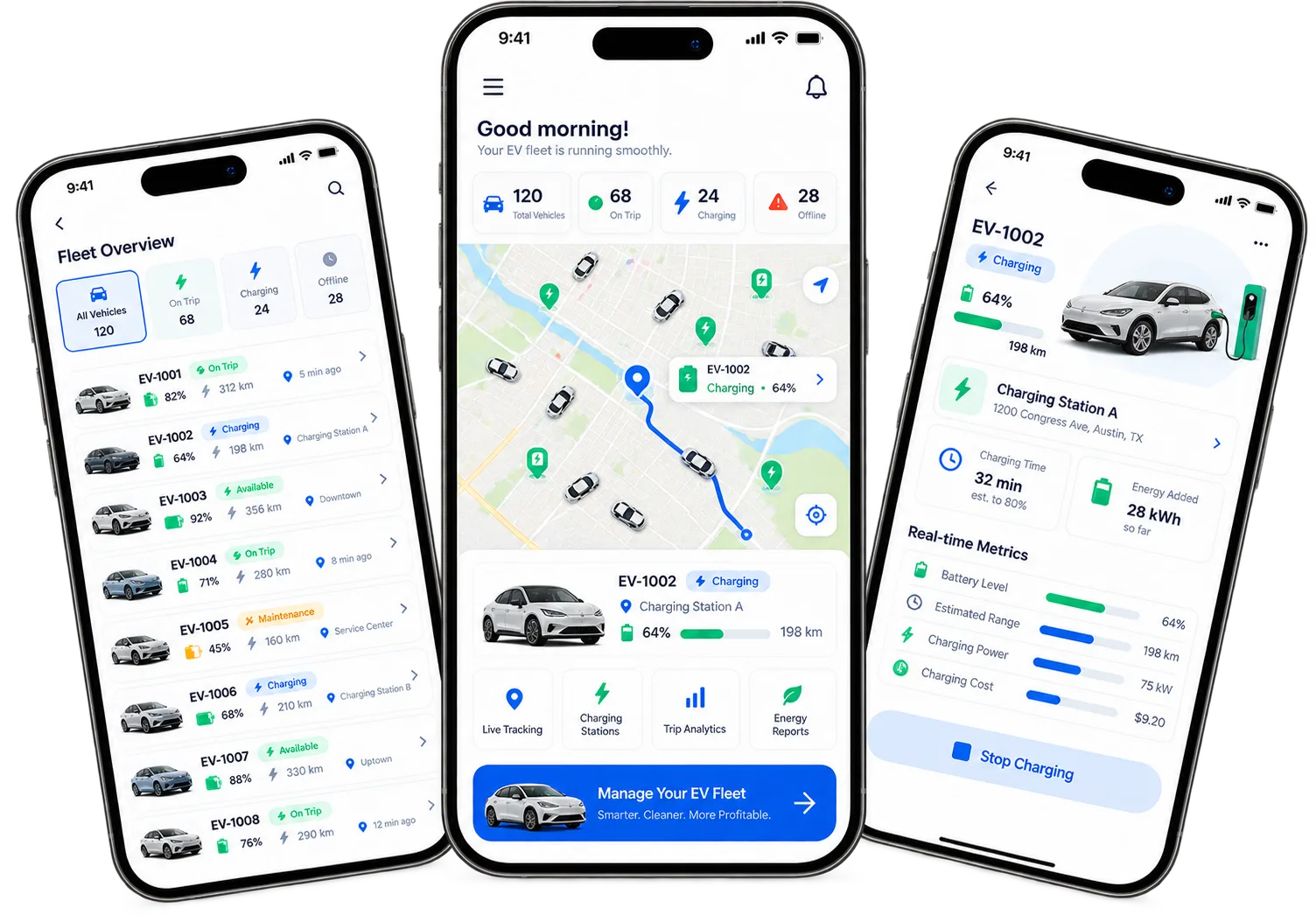
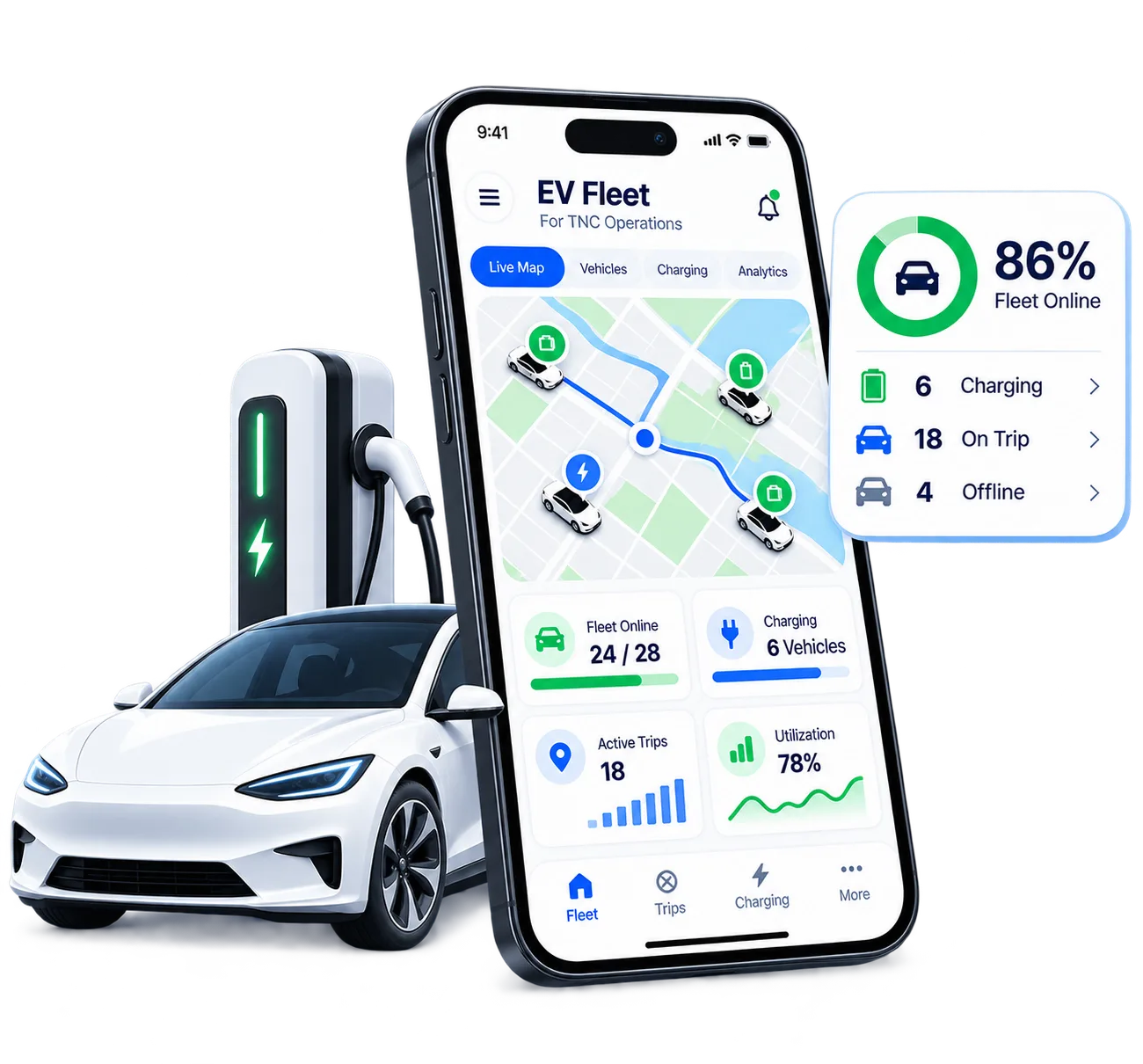
EV fleet management software for TNCs records which vehicle powered each trip mile and turns those records into the two Clean Miles metrics, eVMT share and grams of CO2 per passenger mile. Electric fleet management for TNCs also covers charging, battery-aware dispatch and driver EV adoption, measured against those numbers.
Our clean miles fleet management software services cover the full path from trip record to regulatory filing. Each capability can ship on its own or plug into a platform you already run, with reporting accuracy checked against your past filings.
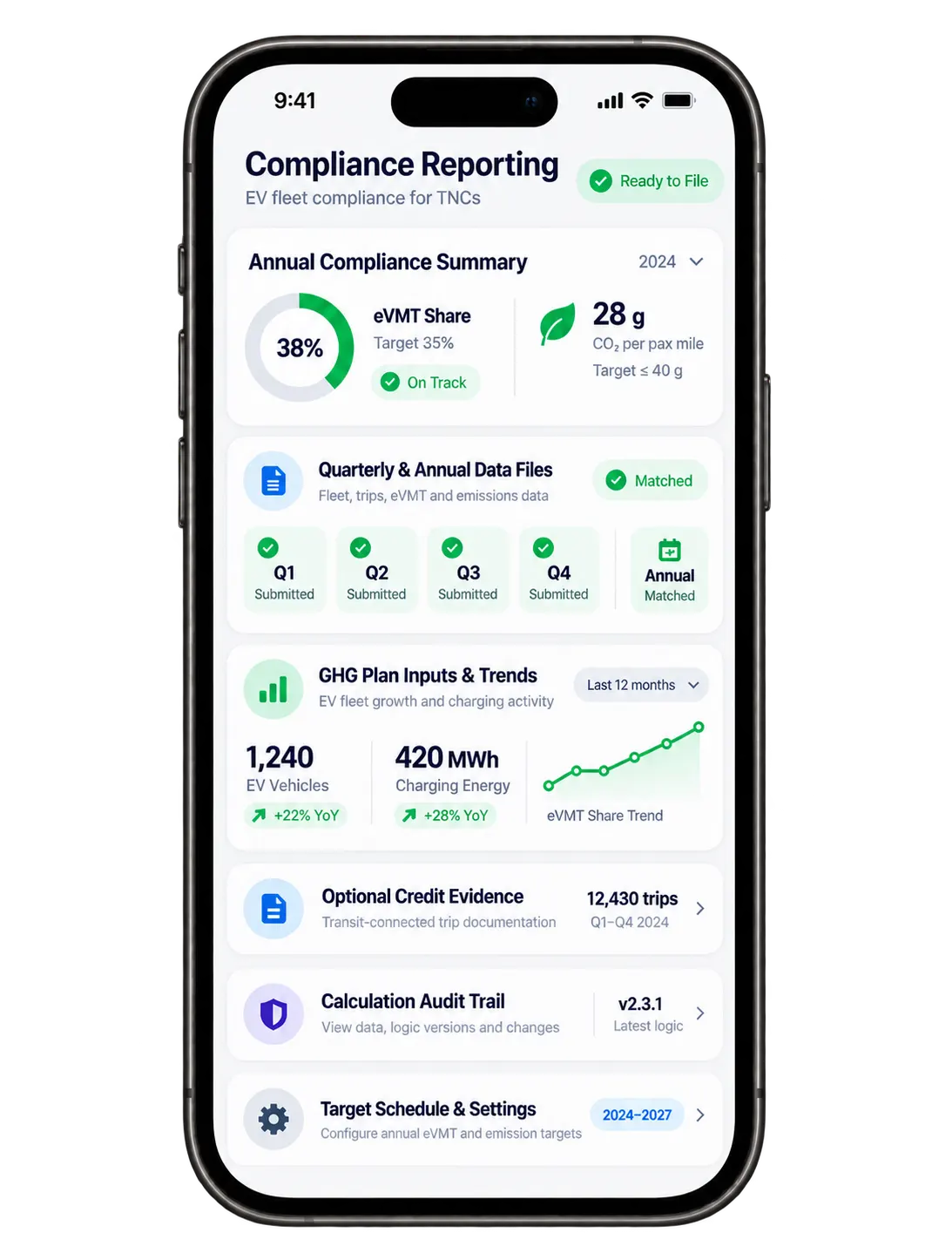
Annual compliance summaries, quarterly data and GHG plan inputs generated from one trip dataset, with every figure traceable to source records.
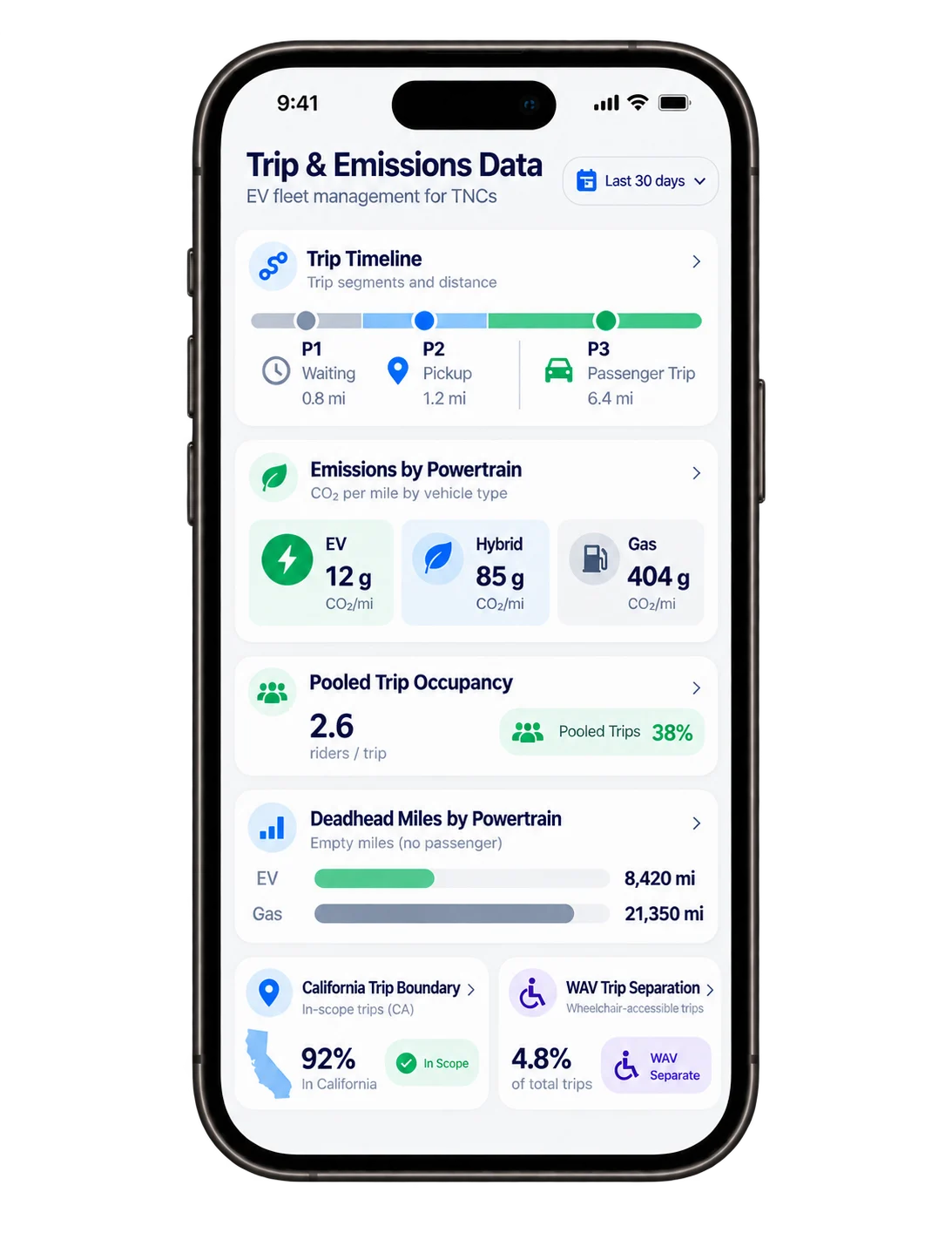
Each trip is split into Periods 1, 2 and 3, tagged by powertrain and occupancy, then rolled into eVMT share and CO2 per passenger mile.
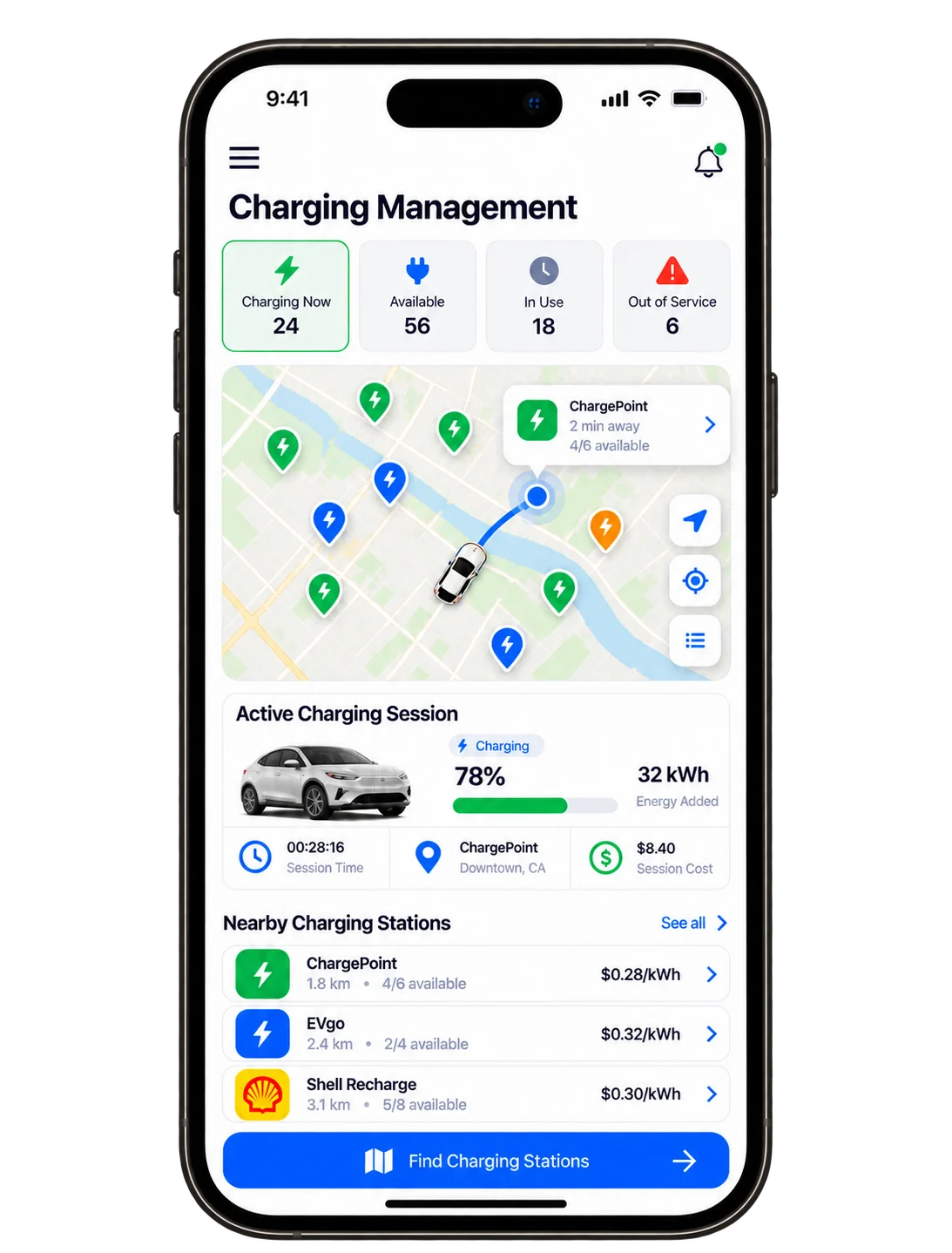
Connect public charging networks and partner depots to your platform, so session cost, location and energy delivered sit next to each driver's trip data.
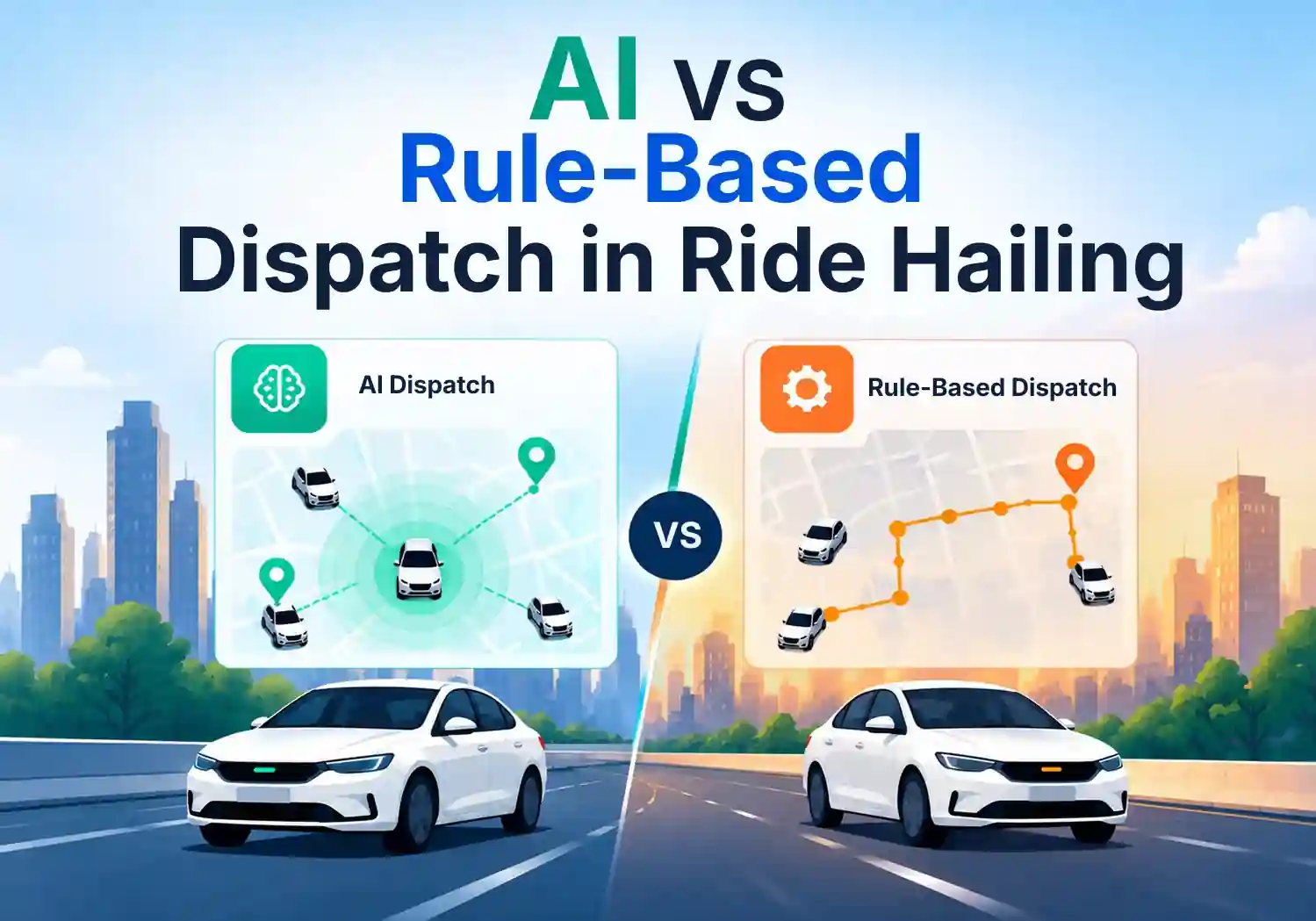
Battery level and charger availability feed your existing dispatch, so EVs stay online through demand peaks. Matching models come from our AI ride-hailing optimization work.
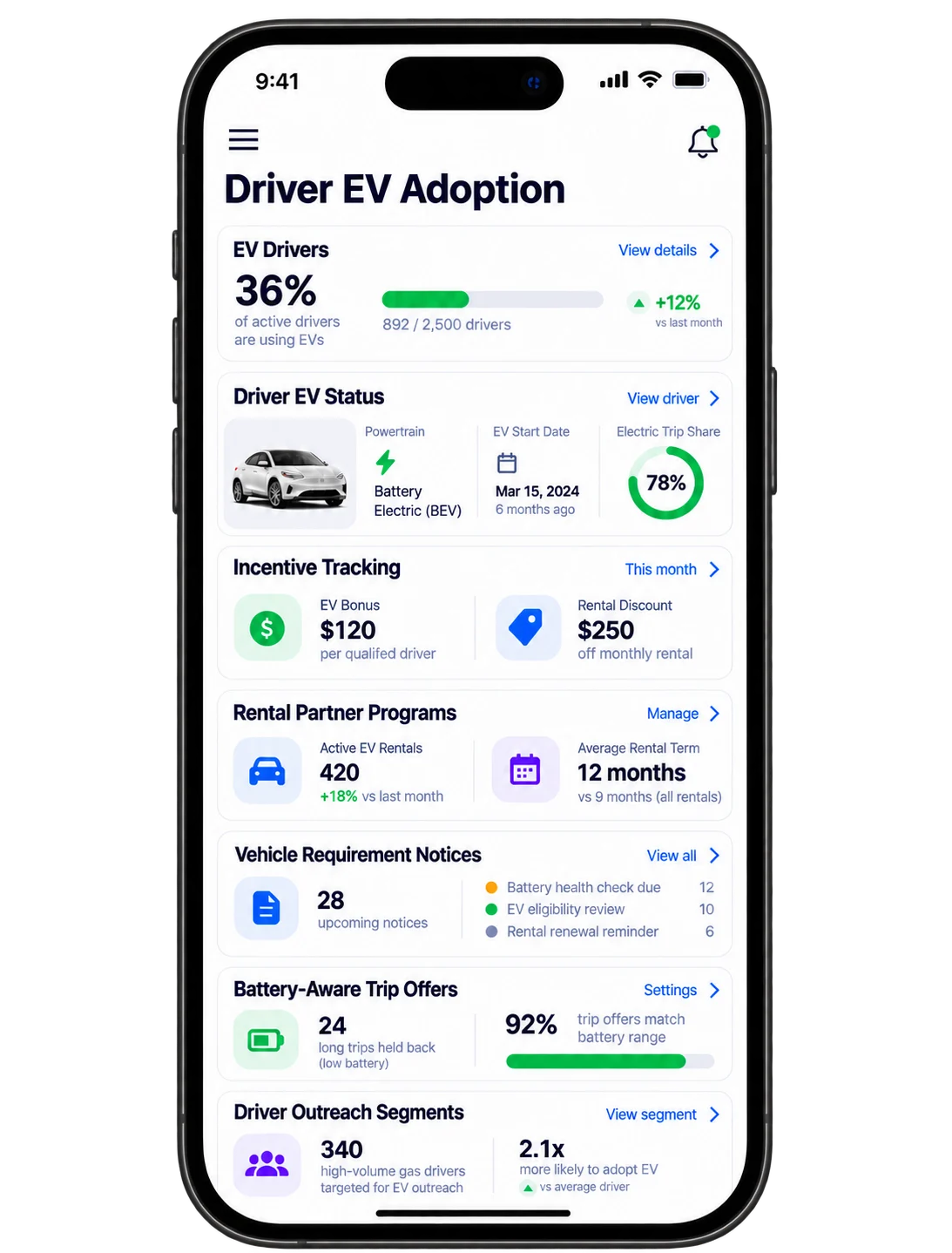
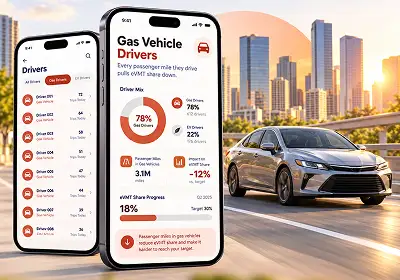
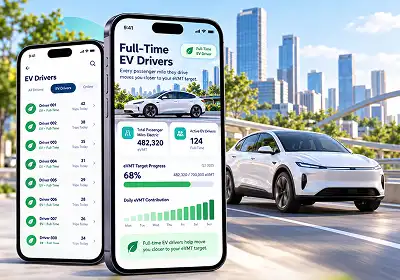
Track which drivers run EVs and which incentives each one received, so electrification spend goes to drivers still on gas.
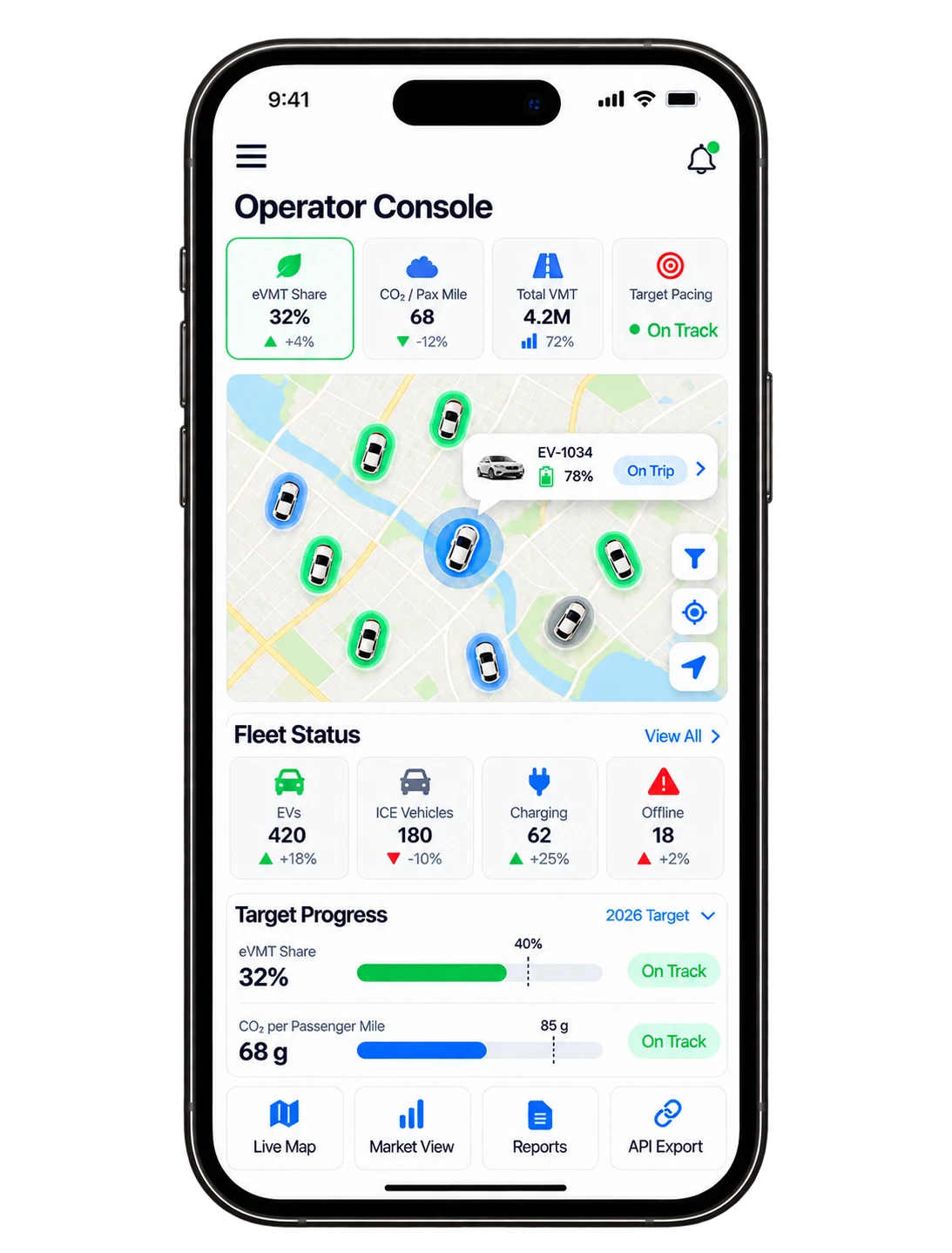
For rental and fleet partners supplying EVs to drivers, live location, state of charge and utilization for every vehicle, by driver and shift.
Feature Tour
Pull the prior year's eVMT share and grams of CO2 per passenger mile into a summary report ready for first-quarter filing.
Recurring data submissions build from the same trip tables as the annual summary, so figures match across every filing.
Historical trends, driver EV counts and charging data are packaged for the biennial greenhouse gas reduction plan your team writes.
Transit-connected trips are logged with the payment and connection proof the optional credit rules ask for, ready to attach.
Every reported number links back to the trips, vehicles and emission factors behind it, with versioned calculation logic kept on file.
Annual targets live as settings, so a delayed or revised schedule from CARB or the CPUC updates pacing without code changes.
Miles are split into waiting for a match, driving to pickup and carrying a passenger, matching the periods the regulation defines.
Each vehicle carries its fuel type and emission factor from the driver profile, so every mile gets the correct CO2 value.
Pool-requested and pool-matched trips are flagged so the right occupancy value applies when passenger miles traveled are calculated.
Empty miles in gas vehicles raise the fleet's emissions figure, so they are reported by zone, shift and vehicle type.
Trips are flagged by where they start, so only miles inside the regulation's scope count toward California figures.
Wheelchair accessible vehicle trips are separated out, since the standard leaves them out of fleet emissions calculations.
Live port status, tariffs and session data from public networks over OCPI, plus OCPP for chargers your fleet partners own.
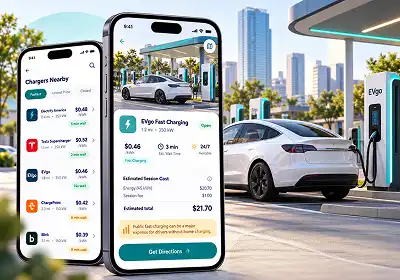
Every charging session is recorded with location, energy delivered and price, giving finance an energy cost for each electric mile.
See how much fleet energy is bought at off-peak rates, by driver and by site, and where incentives could shift more.
Drivers get suggested chargers with predicted wait and price, and they keep the final choice on where to plug in.
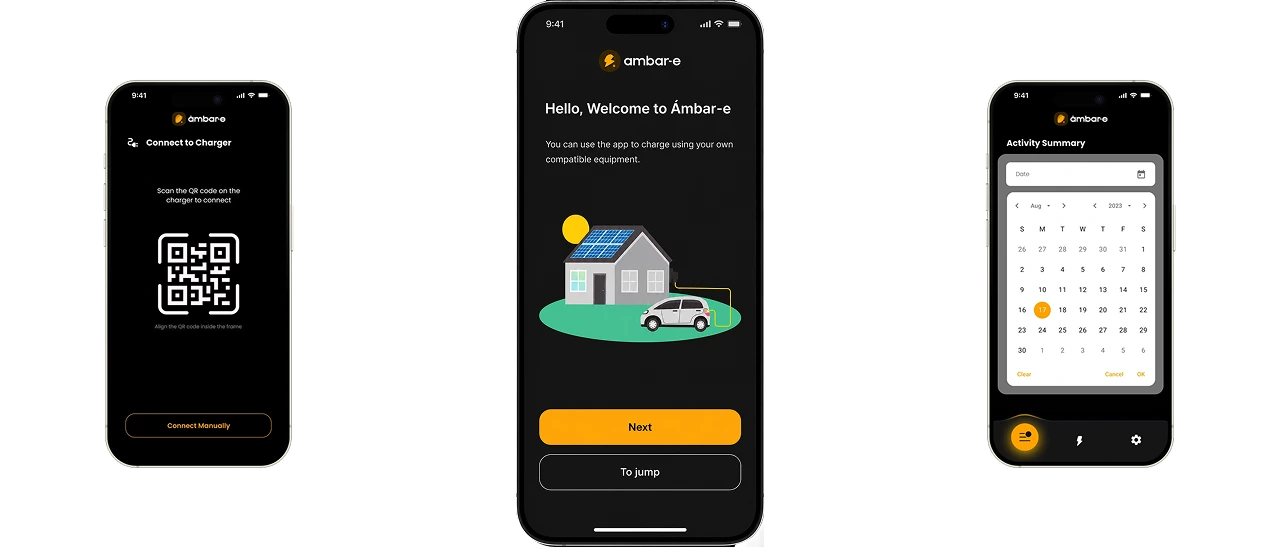
Home and apartment-building sessions are logged alongside public charging, the same charger types we supported for Ambare-e.
Failed and interrupted sessions are logged per port, so dispatch and drivers can steer away from sites that keep failing.
Each driver profile shows powertrain, EV start date and the share of trips completed electric, updated whenever the vehicle changes.
Platform EV bonuses and rental discounts are recorded per driver, so spend can be compared with the miles that moved to electric.
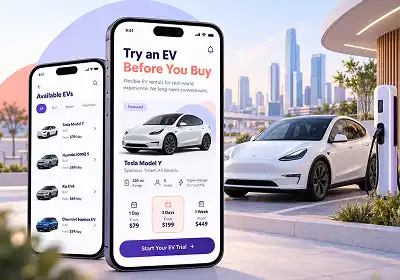
Drivers renting EVs through partner programs are tracked by vehicle and rental term, so rental miles count toward the right figures.
If you set vehicle requirements, drivers receive advance notices on a set schedule, and a record of each notice is kept for regulators.
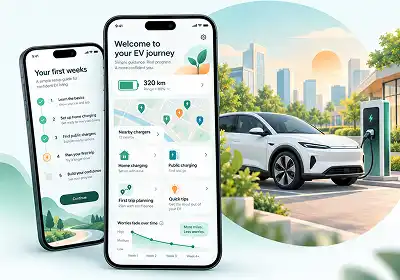
Trips beyond a car's remaining range are held back with a stated reason, so drivers new to EVs see why an offer was skipped.
Gas-vehicle drivers with high trip volume are grouped for EV rental offers and charging education inside the driver app.
Year-to-date eVMT share and grams of CO2 per passenger mile are plotted against the target in force, refreshed daily.
A live map of every EV with state of charge, current status and assigned driver, filterable by partner fleet or zone.
Annual vehicle miles are projected through year end, so smaller TNCs know ahead of time when they will cross the threshold that triggers targets.
Battery readings arrive from OEM connected-car APIs or telematics, tagged with when and where each reading came from, so stale data carries less weight.
Figures split by city and state, so California reporting stays separate from markets with different electrification rules or none at all.
Reports and raw trip tables export in open formats, and an API lets your compliance team run its own checks.
Tech & Integrations
How We Deliver
Phase 1
We map your trip, vehicle and charging data against what each Clean Miles filing requires.
Phase 2
Rebuild trips into period-level records with powertrain, occupancy and location attached to every mile.
Phase 3
Connect telematics, connected-car APIs and charging networks, and document every data gap and fallback.
Phase 4
We recalculate a past reporting period and walk you through every difference from your filed figures.
Phase 5
Go live market by market, with dashboards, exports and monitoring on every data feed.
Revenue Models
Most operators treat electrification as a compliance cost. Ride hailing fleet management software that tracks every electric mile lets you sell it, and these four models stack.
01
Offer riders an electric-only option at a set premium, with matching that sends those requests to EVs in the zone first.
02
Bill business clients for electric rides each month and attach a trip-level emissions report they can use in their own sustainability reporting.
03
Rent EVs to drivers through partner fleets by the week, and earn a margin on every rental while the miles count toward your eVMT.
04
Share anonymized demand hotspots with charge point operators in exchange for fleet rates or reserved stalls at busy sites.
EV Charging Work Already Shipped
We built the Ambare-e charging app on Flutter and AWS IoT Core, linking custom charger firmware over MQTT for home, semi-public and public chargers.
ISO 27001-Certified Data Handling
VT Netzwelt is ISO 27001 certified, so the trip, location and driver records behind your filings are handled under audited security controls.
Driver App and Reporting in One Team
The same team builds driver app features and the reporting pipeline, so an EV adoption feature is measured in your filings from day one.
A Data Review on the First Call
In the free 30-minute consultation, we look at which Clean Miles figures your current trip data can support and where the gaps sit.
Testimonials
Don't Just Take Our Word For It
Blogs
Mobile App Development
Ride-Hailing App Development, Costs, Tech, and How to Launch
Mobile App Development
Build vs Buy vs White-Label Ride-Hailing App: An Enterprise Decision Framework
Mobile App Development
AI vs Rule-Based Dispatch in Ride Hailing, What to Automate First
FAQs
Bring your own filing questions to the free consultation, and we'll walk through them against your data.
Contact Us
Have Questions? Let's Talk!
Fill out this form to drop us an email, and we will reach out to shape something extraordinary.